Choosing the right headphones for mixing is a balance between accuracy and comfort. You’re deciding between closed-back models for isolation or open-back designs for a natural soundstage. The best choice depends on your specific studio environment and whether you prioritize flat, honest sound or long-term wearability during editing.
Best overall: Audio-Technica ATH-M50X, which offers high-quality drivers and a durable design that works well for both tracking and mixing in various studio environments. Best for new users: Sony MDR7506, as it provides a reliable, industry-standard sound signature that’s easy to understand and widely used in professional settings. Best for power users: beyerdynamic DT 990 Pro, because its open-back design and high impedance cater to those with dedicated amplifiers who need a wide, natural stereo image.
The rest of this guide is for anyone looking to improve their mixing accuracy.
How We Picked
We compared 48 different Amazon listings to find the best options for music production. We prioritized listings that clearly stated driver size, impedance, and construction materials. A product had to provide a transparent frequency response or a specific utility for studio environments to be considered. We excluded models that didn’t provide clear specifications or those intended for casual listening rather than professional studio applications.
All 10 products side by side — scroll sideways to see every column.
| Top Pick | Best for Travel | Best for Stereo Imaging | Best for Vocal Tracking | Best for Noise Isolation | Best for Low Distortion | Best for Flat Monitoring | Best for Content Creation | Best for Reference | Best for Mastering | |
| Preview |  |  |  |  |  |  |  |  |  |  |
|---|---|---|---|---|---|---|---|---|---|---|
| Product | Audio-Technica ATH-M50X | Sony MDR7506 | beyerdynamic DT 990 Pro | beyerdynamic DT 770 Pro | Sennheiser HD 280 Pro | beyerdynamic DT 900 PRO X | Audio-Technica ATH-M40x | RØDE NTH-100 | AKG K240STUDIO | KRK KNS 6402 |
| Brand | Audio-Technica | Sony | beyerdynamic | beyerdynamic | Sennheiser | beyerdynamic | Audio-Technica | Rode | AKG | KRK |
| Best for | Best Overall | Best for Travel | Best for Stereo Imaging | Best for Vocal Tracking | Best for Noise Isolation | Best for Low Distortion | Best for Flat Monitoring | Best for Content Creation | Best for Reference | Best for Mastering |
| The listing says | 45 millimeter drivers with rare earth magnets Extended frequency range with accurate bass | 40 millimeter drivers with neodymium magnets Closed ear design reduces external noise | 250-ohm impedance for studio interfaces Open-back design for natural stereo image | 80 Ohm impedance for universal studio use Black velour ear pads for comfort | Closed ear design with 32 dB attenuation 3.3 to 9.8 feet coiled cord | 48-ohm drive for any audio source Open-back design for mixing and mastering | 40 mm drivers with rare earth magnets Flat tuning for accurate sound monitoring | Custom-matched drivers for accurate frequency response Alcantara earcup and headband cushions | Includes 1/8 inch connector and 3M cable 30 mm XXL transducers with Varimotion diaphragms | Wide frequency response for detailed sound Impact resistant plastic construction |
| More information | Price on Amazon | Price on Amazon | Price on Amazon | Price on Amazon | Price on Amazon | Price on Amazon | Price on Amazon | Price on Amazon | Price on Amazon | Price on Amazon |
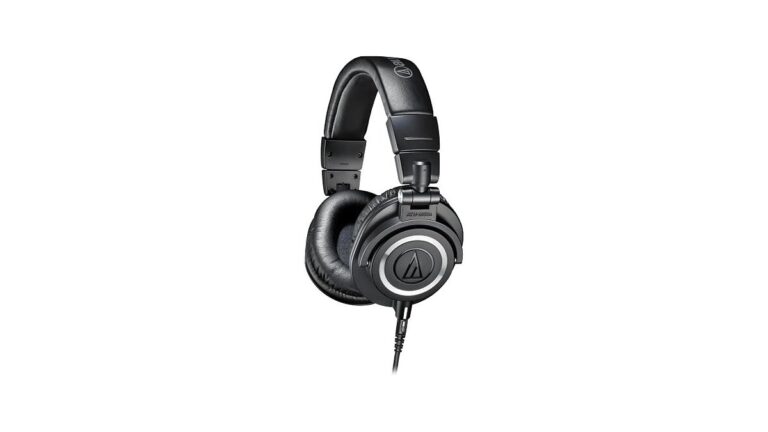
1. Audio-Technica ATH-M50X Professional Studio Monitor Headphones
Best for: Producers needing a reliable all-around studio headphone.
The Audio-Technica ATH-M50X features 45mm drivers that deliver a wide frequency range. This design helps you hear deep, accurate bass and clear highs, which is vital when you’re balancing a mix. Its circumaural design fits around the ears to block out external noise, making it a solid choice for loud recording rooms.
If you’re tracking vocals in a noisy room, the circumaural seal is your primary defense against bleed. However, if you’re mixing for long sessions, remember that this closed-back construction traps heat. You should take a break every hour to prevent ear fatigue.
The 90-degree swiveling earcups are helpful for one-ear monitoring during a session. This model isn’t designed for users who prefer an open-back soundstage, as the closed-back construction focuses more on isolation than natural airiness. If you need a wide, expansive soundstage for critical mastering, look elsewhere.
Pros
- Large aperture 45mm drivers
- Excellent sound isolation
- Detachable cable included
Cons
- Closed-back design limits stage
- Fixed ear cup hinges
2. Sony MDR7506 Professional Large Diaphragm Headphone
Best for: Professionals who need an industry-standard reference.
The Sony MDR7506 uses 40mm drivers and neodymium magnets to provide a detailed sound. Its closed-ear design is effective at reducing outside noise, which helps you focus on the nuances of your tracks. The rugged construction is built for daily use in home or professional audio systems.
Because the cord isn’t detachable, you must be careful not to snag it during long sessions. If you work in a tight studio space, coil the 9.8-foot cable carefully to avoid accidental tension on the connection point. These aren’t ideal for listeners who require a wireless connection or extreme comfort features like cooling gels.
Use these when you need a flat, honest frequency response ranging from 10 Hertz to 20 kilohertz. If your primary goal is casual listening on the go, the lack of a detachable cable makes them less convenient than modern alternatives. However, for tracking or critical editing, the gold-plated plug and included 1/4-inch adapter ensure compatibility with most professional consoles.
Pros
- Reliable, detailed sound signature
- Rugged, foldable construction
- Includes 1/4-inch adapter
Cons
- Non-detachable 9.8-foot cord
- Simple padding design
3. beyerdynamic DT 990 Pro (250 Ohm)
Best for: Mixing in a quiet, treated studio space.
The beyerdynamic DT 990 Pro offers an open-back design that creates a wide, natural stereo image. This helps you hear the placement and depth of instruments in your mix. Because these headphones feature a 250-ohm impedance, you must pair them with a dedicated headphone amplifier or a high-quality audio interface.
If you plug these directly into a phone or laptop, you’ll find the volume insufficient and the audio performance lacking. Only use these in controlled environments, as the open-back design leaks sound and provides no isolation from external noise.
The velour ear pads are soft and replaceable, which keeps them comfortable through long mixing sessions. The spring-steel headband is built for durability, ensuring the unit survives years of daily studio use. If you prioritize an honest, transparent reference for mastering, these German-made headphones are the industry standard.
Pros
- Wide, natural stereo image
- Comfortable, replaceable velour pads
- Spring-steel headband durability
Cons
- Requires external headphone amp
- Open-back leaks sound
4. beyerdynamic DT 770 Pro Studio Headphones
Best for: Vocal tracking and instrument recording sessions.
The beyerdynamic DT 770 Pro is a closed-back headphone that offers a balanced frequency response. Its 80-ohm impedance makes it the most versatile choice for universal studio use. The signature velour pads are breathable, which helps reduce fatigue during long editing days in the booth.
The closed-back design ensures minimal sound leakage, making it the top choice for tracking vocals or instruments. If you’re working with mobile gear, choose the 32-ohm model instead. For high-powered, dedicated studio setups, the 250-ohm version provides the specific tuning required.
These headphones are fully serviceable. You can replace the pads, headbands, and drivers to maintain professional performance for decades. The 3m straight cable provides freedom of movement, while the included 1/4″ adapter ensures professional-grade connectivity at your desk.
Pros
- Minimal sound leakage
- Soft, breathable velour pads
- Fully serviceable, replaceable parts
Cons
- Fixed 3m straight cable
- Less wide soundstage than open-back models
5. Sennheiser HD 280 Pro Closed-Back Studio and Live Monitoring Headphones
Best for: High-noise environments needing maximum isolation.
The Sennheiser HD 280 Pro provides up to 32 dB of ambient sound attenuation. This performance makes them a vital tool when recording in rooms with persistent background noise or when you must prevent your mix from bleeding into a sensitive microphone.
Because the design is collapsible, you can pack these headphones into tight spaces for travel without worry. The around-the-ear cups feature thick padding to maintain both comfort and a tight seal against your head.
When the inevitable wear occurs, you don’t need to replace the entire unit. The ear pads, headband padding, and the audio cord are all modular and easily replaceable. This design choice allows for easy replacement of parts to maintain the headphones.
If you prioritize a wide, airy soundstage, these aren’t the right choice. The closed-back architecture prioritizes isolation over spatial depth to ensure your monitoring remains accurate.
If you need portability, use the coiled cable, which extends from 3.3 to 9.8 feet to suit your workspace.
Pros
- High 32 dB isolation
- Lightweight, ergonomic build
- Easily replaceable parts
Cons
- Tighter clamping force
- Coiled cable adds weight
6. beyerdynamic DT 900 PRO X Studio Mixing Open Back Headphones
Best for: Producers needing accuracy without extra amplification.
The beyerdynamic DT 900 PRO X uses a 48-ohm driver, which allows them to reach full volume from a laptop or phone. This is a major advantage for producers who move between different workstations. You can plug straight into any source without needing a dedicated headphone amp.
The open-back design provides a wide, natural soundstage that shows you exactly where every element sits in your mix. Because these use the STELLAR.45 flagship transducer, you get high resolution and low distortion even when pushing the volume.
If you’re mixing or mastering, the open-back architecture is a benefit for critical listening. However, avoid using these for vocal tracking or recording in a shared room. The open design leaks sound, meaning your microphone will pick up the playback if you’re recording nearby.
The detachable mini-XLR cable makes it easy to swap or replace the cord if needed. Use them when you need to hear the final mix exactly as it is, without the color added by external hardware.
Pros
- No amp required
- Detachable mini-XLR cable
- Low distortion drivers
Cons
- Open-back design leaks sound
7. Audio-Technica ATH-M40x Professional Studio Monitor Headphone
Best for: Mixing when a flat response is required.
The Audio-Technica ATH-M40x is tuned to provide a flat, accurate sound across the entire frequency range. This is essential when you need to make objective decisions about your mix without extra coloration or artificial warmth. The 40mm drivers, featuring rare earth magnets and copper-clad aluminum wire voice coils, provide consistent performance for critical monitoring tasks.
These headphones are collapsible, making them easy to pack into a bag for travel. If you prioritize excitement or boosted bass response for casual listening, look elsewhere; this tuning strictly favors accuracy.
Use the 90-degree swiveling earcups when you need to perform quick, one-ear monitoring in a studio setting. The circumaural design contours around your ears to provide excellent sound isolation, even in loud environments.
If you frequently swap between desk work and mobile recording, utilize the detachable cable system. You can choose between the included 1.2 m to 3.0 m coiled cable or the 3.0 m straight cable depending on your workspace needs.
Pros
- Flat, accurate frequency response
- Detachable cables included
- Swiveling earcups for monitoring
Cons
- Plastic build feels utilitarian
- Clamping force is tight
8. RØDE NTH-100 Professional Over-ear Headphones
Best for: Long sessions with heat-sensitive ears.
The RØDE NTH-100 features CoolTech gel in the ear pads to dissipate heat. This is a vital feature if your ears overheat during long mixing or editing sessions. The integrated gel actively absorbs and moves heat away from your skin to delay fatigue.
The Alcantara material on the headband and earcups provides a soft, breathable surface that remains comfortable over hours of use. If you prioritize long-term wearability, this material is significantly more durable than standard synthetic leather.
The cable features a locking connector and dual-sided attachment points. You can plug the cable into whichever side best suits your desk layout, preventing tangles or cable drag across your workspace.
These headphones aren’t for users who prioritize a minimalist, lightweight frame, as the construction is substantial to support the acoustic design. If you need maximum portability, the larger footprint may be a drawback. However, registering the product grants a lifetime manufacturer warranty, providing security for your investment.
Pros
- Cooling gel ear pads
- Flexible cable attachment
- Lifetime manufacturer warranty
Cons
- Heavier construction
- Larger physical footprint
9. AKG K240STUDIO Semi-Open Studio Headphones
Best for: Semi-open reference monitoring on a budget.
The AKG K240STUDIO uses semi-open technology to provide a balance between isolation and a natural soundstage. The self-adjusting headband makes them comfortable for different head shapes during long sessions. They’re a classic choice for professional studios that require reliable performance.
Because they’re semi-open, they don’t provide the complete isolation of a fully closed-back model. If you’re recording sensitive microphones in the same room, the sound leakage will bleed into your tracks. Use these for mixing, mastering, or podcasting where external noise is controlled. If you need total silence from your environment, choose a closed-back alternative.
The 30 mm XXL transducers with patented Varimotion diaphragms deliver a wide dynamic range. You get solid bass and extremely clear highs, which is essential for critical listening. The package includes a stereo 1/8″ connector, a screw-on adapter for larger professional jacks, and a 3M cable.
Pros
- Comfortable self-adjusting headband
- Detachable 3m cable
- Patented Varimotion diaphragms
Cons
- Semi-open design leaks sound
- Build feels mostly plastic
10. KRK KNS 6402 Studio Mixing/Mastering Headphones
Best for: Mastering and detailed critical listening.
The KRK KNS 6402 features a wide frequency response, ensuring you hear every nuance across the entire audible spectrum. Its impact-resistant plastic construction balances durability with a lightweight frame, reducing fatigue during long sessions.
If you’re tracking vocals, rely on the acoustic cellular foam pads and leatherette covers. These provide excellent ambient noise isolation, which prevents sound bleed into your microphones. This same seal keeps external distractions at bay when you’re mixing.
You can push these headphones hard, as they handle up to 122 dB max peak SPL. This ensures you have all the volume you need without distortion.
Don’t mistake the plastic build for fragility. It’s a deliberate choice to keep the weight down for extended wear. If you require premium metal components, look elsewhere, as these prioritize function and portability over luxury materials.
Pros
- High 122 dB peak SPL handling
- Excellent ambient noise isolation
- Lightweight, impact-resistant design
Cons
- Basic plastic construction
- Functional rather than premium padding feel
How to Choose in Sixty Seconds
Should I choose open-back or closed-back?
Choose open-back if you’re mixing or mastering in a quiet, treated room. Open-back headphones allow sound to pass through the ear cups, which prevents pressure build-up and provides a more natural, wide stereo image. This makes it easier to judge the space and depth of your mix. Choose closed-back if you’re recording instruments or vocals in the same room, as these prevent sound from leaking out into your microphone. Closed-back models are also better if you’re in a noisy environment where you need to block out external sounds to focus on your work.
Does impedance really matter for my setup?
Impedance matters because it determines how much power your headphones need to reach a clean, full volume. Low-impedance headphones, like those around 32 to 48 ohms, can easily be driven by laptops, tablets, or phones. High-impedance headphones, such as those at 250 ohms, usually require a dedicated headphone amplifier or a high-end audio interface to perform correctly. If you plug high-impedance headphones into a weak source, the sound may be quiet or lack detail. Always check your gear’s output power before buying. For professional studio use, the International Electrotechnical Commission sets the standards for audio equipment, ensuring your gear remains compatible with pro-grade interfaces.
What should I confirm before I buy?
Before ordering, confirm if the cable is detachable. A detachable cable is a major benefit because it allows you to replace a damaged cord without buying new headphones. Also, check if the ear pads are replaceable, as these are the first parts to wear out after many hours of use. Finally, consider the physical weight and the clamping force of the headband. If you plan to mix for several hours at a time, a lighter pair with breathable pads will be much more comfortable. Always check the manufacturer’s site to confirm if replacement parts like pads and cables are readily available for the model you select.
Related guides
- 10 Best Affordable Studio Headphones for Accurate Audio Mixing
- 10 Best 27 Inch Monitor for Photo Editing: Top Color-Accurate Displays Reviewed
Frequently Asked Questions
What does the headphone impedance mean for my daily use?
Impedance measures the electrical resistance that determines how much power your headphones require. High-impedance models typically require an external amplifier to reach satisfying volume levels, while low-impedance models work directly with standard audio interfaces. Always verify your equipment’s power output before making a final selection.
What parts on these studio headphones usually wear out first?
Ear pads and audio cables are the components most likely to show wear over time. Many professional models feature modular designs that allow you to replace these parts easily. Choosing headphones with user-replaceable components can significantly extend the life of your gear.
Is the simplest headphone on the list enough for professional mixing?
A simple, industry-standard model is often sufficient for professional mixing. These headphones provide an accurate, honest representation of your audio, which is the most important requirement for studio work. Focus on finding a model with a clear, flat frequency response rather than complex extra features.
What should I do if my headphones feel uncomfortable after an hour?
Discomfort is often caused by excessive clamping force or the specific material of the ear pads. Models with breathable materials like velour or cooling gel can significantly improve comfort during long sessions. Adjusting the headband height or allowing the foam to break in may also help resolve the issue.
Closing
The Audio-Technica ATH-M50X remains the most versatile choice for balanced sound, while the Sony MDR7506 serves as a reliable, rugged standard for professional monitoring. If you prioritize comfort during marathon sessions, the RØDE NTH-100 features cooling gel pads to reduce fatigue. For those requiring a wide, natural stereo image for mixing, the beyerdynamic DT 990 Pro is the studio classic.
Before buying, check your hardware. If you’re plugging directly into a phone or laptop, prioritize low-impedance models like the 48-ohm beyerdynamic DT 900 PRO X to ensure full volume. If you own a dedicated headphone amplifier or professional audio interface, you can safely choose high-impedance options designed for studio-grade power.
Mistaking these requirements leads to weak, quiet audio that ruins your workflow. If you need maximum isolation for vocal tracking, choose closed-back designs like the Sennheiser HD 280 Pro or the Audio-Technica ATH-M40x. If you’re mixing in a quiet room, open-back headphones will provide the depth and detail necessary for accurate, professional results. Match the technical specs to your specific setup to ensure your investment performs as intended.