Choosing a headphone guitar amplifier means balancing your need for portability against the range of sounds you want at your fingertips. These devices bridge the gap between your instrument and your ears, letting you practice anywhere. The main differences lie in how they connect, their built-in effects, and their app support.
Best overall: Fender Mustang Micro Plus, which offers 100 editable presets and a clear display for easy adjustments. Best for advanced tone shaping: BOSS Katana:GO, providing stage-class sounds and 3D spatial audio technology. Best for simple analog feel: Vox amPlug 3, featuring classic AC30 tube amp tones and a long battery life.
This guide is for players of all levels seeking a quiet, efficient way to practice.
How We Picked
We compared 32 different headphone guitar amplifier listings to find the most capable options for your practice routine. To make our list, a product had to clearly state its connectivity options, battery life, and included effect models. We excluded any items that lacked clear specifications regarding their input types or power requirements. Our focus remained on reliability and ease of use, ensuring you get a device that works as advertised right out of the box.
All 10 products side by side — scroll sideways to see every column.
| Top Pick | Best for Spatial Sound | Best for AI Tools | Best for Tube Tones | Best for Silent Practice | Best for App Control | Best for Analog Tone | Best for Bass | Best for High Gain | Best for Drum Grooves | |
| Preview |  | 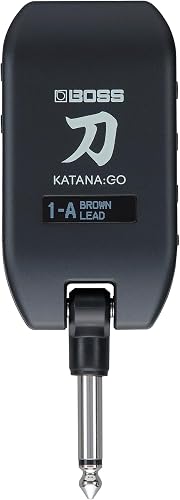 |  |  |  |  |  | 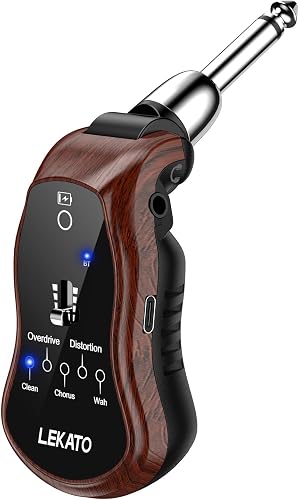 |  |  |
|---|---|---|---|---|---|---|---|---|---|---|
| Product | Fender Mustang Micro Plus | BOSS Katana:GO | Positive Grid Spark NEO | Vox amPlug 3 | Valeton Rushead Max | SONICAKE Amphonix 2 | Blackstar amPlug Fly | LEKATO Guitar Amp | F1R Mini Amp | Flamma Guitar Headphone Amp |
| Brand | Fender | BOSS | Positive Grid | VOX | Valeton | SONICAKE | Blackstar | LEKATO | flatsons | FLAMMA |
| Best for | Best Overall | Best for Spatial Sound | Best for AI Tools | Best for Tube Tones | Best for Silent Practice | Best for App Control | Best for Analog Tone | Best for Bass | Best for High Gain | Best for Drum Grooves |
| The listing says | 100 watts, 6.8"D x 6.3"W x 2.2"H 25 amp models, 25 effect models, 100 presets | Compact design for guitar and bass Katana amp sounds with wireless streaming | Wireless Bluetooth headphones with custom drivers Wireless transmitter with 1/4" input | VOX AC30 tube amp sound Dual-channel Normal and Top Boost | Built-in 1/4" plug for silent practice Three amp voicings with level, tone, gain | 9 effect modules and 50 factory presets Bluetooth audio, 6.35mm input, 3.5mm output | Compact portable electric guitar amplifier Fully-analog circuitry | Headphone output for silent practice Built-in Bluetooth receiver for backing tracks | 16-bit sampling with 1MΩ high-impedance input High-gain distortion with gain, tone, volume controls | 14 amp models with save function 14 effects with parameter adjustment |
| More information | Buy on Amazon | Buy on Amazon | Buy on Amazon | Buy on Amazon | Buy on Amazon | Buy on Amazon | Buy on Amazon | Buy on Amazon | Buy on Amazon | Buy on Amazon |
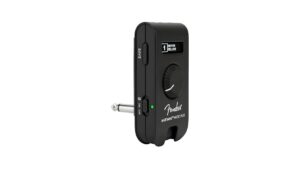
1. Fender Mustang Micro Plus Headphone Amplifier
Best for: Players wanting an all-in-one practice and recording solution.
Its integrated display and parameter modify control make it easy to dial in specific sounds without needing a phone nearby. The Bluetooth streaming feature is great for jamming along to your favorite songs in real time, with video sync ensuring your audio stays aligned.
Because it includes 100 editable preset slots, you can store your favorite sounds and recall them instantly during practice. If you need to capture your ideas, the bi-directional USB recording allows you to track performances directly to a computer or mobile device.
It isn’t for the guitarist who prefers a strictly plug-and-play analog experience without any digital menus or app integration. If you’re playing longer than four hours, keep a charger ready, as the rechargeable battery will hit its limit.
Pros
- Integrated display for easy navigation
- 100 editable preset slots included
- Bi-directional USB recording capability
Cons
- Requires app for deeper editing
- Limited to 4+ hours battery
2. BOSS Katana:GO
Best for: Musicians who want high-end sound quality in a pocket-sized device.
The Katana:GO brings the sound of full-sized stage amps to your headphones. Its advanced spatial technology creates a 3D sound environment, making long practice sessions feel more natural and less fatiguing. The smartphone integration allows you to explore a massive library of sounds through BOSS Tone Exchange.
The device handles both guitar and bass, with dedicated modes for each to ensure the right effects are always available. If you play guitar, you have access to 10 amp types and over 85 effects. If you play bass, you get three amp types and over 65 effects.
This tool isn’t for those who find smartphone-dependent interfaces distracting for quick sessions. If you prioritize immediate physical knobs, this menu-heavy design may slow you down. However, the wireless Bluetooth streaming makes it a superior choice for players who practice with backing tracks. You simply plug the unit into your instrument, connect your headphones, and you’re ready to play anywhere without disturbing others.
Pros
- Authentic stage-class Katana sounds
- 3D spatial audio experience
- Dedicated modes for guitar and bass
Cons
- Heavily reliant on smartphone app
- Complex menu structure for beginners
3. Positive Grid Spark NEO Wireless Smart Guitar Headphone Amp &
Best for: Guitarists who want wireless freedom and AI-driven learning tools.
This system is unique because it includes a wireless transmitter, removing the need for a physical cable between your guitar and the amp. The AI-powered app helps you learn chords and create custom tones, which is ideal for structured practice. Its custom drivers are designed specifically for guitar frequencies to ensure clear, high-quality audio.
If you find yourself tangled in cables during practice, the transmitter provides a low-latency solution for electric, acoustic, and bass guitars. You can also use the built-in 1/4″ input if you prefer a standard connection.
You get 6 hours of play time on a single charge, which covers even the longest practice sessions. If your session exceeds this window, you must pause to recharge. This device isn’t for the player who avoids digital interfaces, as the Spark app is essential for unlocking the full gear collection and AI features.
Pros
- Wireless transmitter included
- AI-driven tone and chord tools
- Exceptional noise-isolating sound
Cons
- Requires app for full functionality
- Battery life limited to 6 hours
4. Vox amPlug 3 AC30 Headphone Guitar Amplifier w/Stereo FX
Best for: Traditionalists who love the classic AC30 tube sound.
The amPlug 3 uses analog circuitry to mimic the dynamics and overtones of a real tube amplifier. It’s incredibly lightweight at 40 grams, making it a perfect companion for travel or quick sessions when you’re away from your main gear. The nine built-in rhythms are a helpful addition for keeping time during solo practice, covering genres from rock and pop to Latin and jazz.
With up to 16 hours of battery life from two AAA batteries, it’s one of the most reliable options for extended use. Rely on the Normal channel for clean tones or switch to the Top Boost channel when you need a classic overdriven sound. If you need to capture your performance, use the included TRRS cable to connect directly to your smartphone for recording or streaming.
It isn’t for the player who needs modern digital features like Bluetooth streaming or deep parameter editing. If you prefer a wireless setup, this unit will disappoint; if you value responsive, tube-like analog dynamics, it’s the superior choice.
Pros
- Authentic analog tube amp feel
- Long 16-hour battery life
- Includes nine built-in drum rhythms
Cons
- No wireless Bluetooth connectivity
- Requires AAA batteries
5. Valeton Rushead Max RH-100 Pocket Headphone Guitar Amp
Best for: Players needing a simple, no-fuss portable practice tool.
This device features a simple layout with dedicated knobs for level, tone, and gain. It’s very intuitive, allowing you to switch between clean, overdrive, and distortion modes with a single button. The built-in effects like chorus, tremolo, and reverb are easy to adjust on the fly.
If you play bass, choose the RH-101 model instead; the standard RH-100 is voiced specifically for guitar. Always verify your instrument’s output jack orientation before buying, as the fixed 1/4″ plug may not fit comfortably into recessed or specialized body shapes.
Because it uses a rechargeable lithium battery, you avoid the hassle of buying disposable batteries. You get up to 5 hours of play time per charge. It isn’t for the guitarist looking for a wide variety of amp models or advanced digital presets to save their custom tones.
Pros
- Simple, knob-based control layout
- Rechargeable lithium battery
- Very compact and lightweight
Cons
- Limited amp model selection
- No Bluetooth wireless support
6. SONICAKE Guitar Headphone Amp with 9 Effect Module 50 Presets
Best for: Users who want a balance of presets and deep app control.
The Amphonix 2 offers 50 factory presets and 9 customizable slots, covering a wide range of musical styles. The dedicated app lets you fine-tune every effect parameter, which is a great feature for those who like to experiment with their sound. It also supports USB-C recording, making it easy to capture your ideas directly to a phone or computer.
If you’re recording demos, use the USB-C port to bypass external interfaces and send audio directly to your smartphone via OTG. When practicing, stream backing tracks through the Bluetooth connection to keep your setup cable-free. The 1000mAh battery provides enough power for long sessions, and the unit itself is small enough to fit in a pocket.
If you prioritize a tactile, knob-per-function experience, this digital interface may frustrate your workflow. It isn’t for the player who prefers a purely analog signal chain or someone who dislikes digital menu navigation. Always verify your headphone impedance matches the 100Ω output to ensure clear, balanced monitoring.
Pros
- 50 factory presets included
- Deep parameter editing via app
- Easy USB-C direct recording
Cons
- Requires app for full customization
- Small buttons can be tricky
7. Blackstar Electric Guitar Headphone Amplifier (AP2FLYGTR)
Best for: Beginners who want an easy-to-use, reliable practice amp.
The amPlug Fly stands out for its patented ISF control, which lets you shift the tone character from American to British amp sounds. The folding plug mechanism is a smart design that helps it fit into almost any guitar jack position safely. It’s built with analog circuitry for a clear, responsive sound that feels like a real amp.
If you find your tone lacks depth, rotate the ISF control to sweep between different tonal signatures. Use the nine built-in effects—Chorus, Delay, and Reverb—to add texture without needing extra pedals.
The 30-minute auto-off function prevents battery drain if you forget to power down. You get 17 hours of play time from two AAA batteries, provided you avoid leaving the unit idle. If you prioritize portability, this lightweight device is ideal. However, it isn’t for the player who wants high-gain modern digital effects or Bluetooth connectivity for backing tracks.
Pros
- Patented ISF tone control
- 180-degree rotating plug
- Auto power-off saves battery
Cons
- No Bluetooth or aux input
- Limited effects compared to digital units
8. LEKATO Guitar Headphone Amp
Best for: Bass players and guitarists needing a versatile practice tool.
This amp is highly adaptable, working well with electric guitars, bass, and acoustic-electric instruments. The built-in Bluetooth receiver allows you to stream backing tracks wirelessly. Search for “B6” on your mobile device to connect.
Note that this receiver doesn’t support Bluetooth headphones or speakers. If you attempt to pair your wireless headphones, the device won’t output sound. You must use wired headphones or connect via the included 3.5mm to 6.35mm cable to your external speakers.
The five classic effects—Clean, Overdrive, Chorus, Distortion, and Wah—are simple to switch between. Its 180-degree swivel plug makes it compatible with various guitar body shapes, including those with recessed jacks.
The internal battery provides over 8 hours of continuous play. If you’re practicing late at night, use the volume switch to keep your output discreet. This setup is ideal for travel, as it requires only your phone and a wired headset to function anywhere.
Pros
- Compatible with guitar and bass
- Bluetooth receiver for backing tracks
- 180-degree swivel plug design
Cons
- Bluetooth doesn’t support headphones
- Limited to 5 preset effects
9. F1R Mini Guitar Headphone Amp with Distortion
Best for: Beginners who want a simple, straightforward distortion sound.
The F1R focuses on delivering a high-fidelity distortion tone, making it ideal for rock practice. It offers a straightforward design with a trio of knobs for gain, tone, and volume, so you can adjust your sound quickly. It’s very compact, measuring just 88 x 73 x 28mm and weighing 50g, making it easy to carry in a gig bag for practice anywhere.
The 1MΩ high-impedance input preserves your signal, but you must use wired headphones. If you attempt to connect wireless headphones or search for a built-in speaker, you’ll find this unit doesn’t support them.
The 3.5mm aux input allows you to plug in your phone or laptop to jam along with your favorite tracks. It isn’t for the player looking for multiple amp models, modulation effects, or wireless Bluetooth features. Use this if you prioritize a vintage rock sound and simple, daily reliability.
Pros
- Simple and intuitive controls
- Compact and highly portable
- Dedicated 3.5mm aux input
Cons
- No wireless capabilities
- Limited to one distortion sound
10. FLAMMA Guitar Headphone Amp Portable with 28 Drum Grooves 14
Best for: Players who want a full practice rig with drum beats.
The Flamma FX10 is packed with 14 amp models and 14 effects, plus 28 drum grooves to help you keep time. The drum machine is a major plus for solo practice, as it provides a steady beat in seven musical styles ranging from punk to jazz. You can save your custom tone settings directly to the amp models for quick recall, ensuring your favorite sound is ready when you are.
It supports Bluetooth, so you can easily jam along with tracks from your phone. If you need to refine your sound, use the TONE button to cycle through five levels of color, from Darker to Brighter.
This device isn’t for the player who prefers a simple, uncluttered interface. The many features require time to learn because you must toggle between drum groove, volume, and speed modes. If you want a plug-and-play experience, the depth of these menus may feel like a distraction.
Pros
- 28 built-in drum grooves
- 14 distinct amp models
- Bluetooth connectivity included
Cons
- Steep learning curve for features
- More complex than basic models
How to Choose in Sixty Seconds
Which connectivity feature actually matters most?
The most important feature is how you connect your gear. If you use a smartphone for backing tracks, look for a model with Bluetooth, like the Fender Mustang Micro Plus. If you want to avoid cables entirely, the Positive Grid Spark NEO offers a wireless transmitter that removes physical tethers. However, always check if a device supports Bluetooth headphones or just Bluetooth audio input. Many headphone amps receive audio wirelessly but still require you to plug in wired headphones for the output. According to standards set by the Bluetooth Special Interest Group, wireless audio protocols can introduce latency, which is why most professional players still prefer wired headphones for real-time practice.
Should I prioritize digital presets or analog tone?
Digital units like the Flamma Guitar Headphone Amp provide dozens of effects and models, while analog units like the Vox amPlug 3 focus on a few high-quality sounds that react to your playing dynamics. You should choose a digital unit if you enjoy experimenting with many sounds, or an analog device if you prefer a dedicated, tone-focused experience.
What should I confirm before ordering?
Before buying, confirm the physical fit of the amp. Some guitars have recessed jacks or odd shapes that make a fixed-plug amp difficult to use. Models like the Blackstar amPlug Fly or the LEKATO Guitar Amp feature rotating plugs, which are much more forgiving for different jack locations. Also, confirm how the device is powered. Rechargeable units are great for long-term use, but if you prefer not to worry about cables, a battery-powered unit like the Vox amPlug 3 might be better. Finally, check if the device supports bass if you play that instrument, as some guitar-specific amps may not handle low-frequency signals as well as dedicated bass models.
Frequently Asked Questions
What does a headphone amp need to work with my guitar?
A headphone amp requires a 1/4″ input jack to connect to your guitar and a 3.5mm output for wired headphones. Most models feature a rotating plug to fit various guitar bodies. Note that most units do not support wireless headphones due to audio latency.
What goes wrong first on these devices?
The most common issue is the physical input plug becoming loose or damaged from frequent use. Because the unit hangs directly off your guitar, it is vulnerable to pressure. Handle the device carefully when plugging it in or removing it to ensure a solid connection.
Is the simplest one on the list enough for a beginner?
A simple model like the F1R Mini Amp is often the best starting point for a beginner. It provides essential distortion and volume control without the distraction of complex menus. This simplicity allows you to focus on developing your technique before moving to advanced gear.
Closing
The Fender Mustang Micro Plus stands out as the best overall choice due to its intuitive display and wide range of editable presets, making it a reliable tool for any guitarist. For those seeking the most advanced features and 3D sound, the BOSS Katana:GO is a powerful alternative that handles both guitar and bass with ease.
To get started, verify the type of output jack on your instrument to ensure a perfect fit. Many units feature rotating or swivel plugs to accommodate different jack positions, but check your specific guitar’s layout first.
Consider whether you prefer the simplicity of analog control or the deep customization of a digital app. If you choose a Bluetooth-enabled model, remember that many of these devices receive audio wirelessly but still require wired headphones for output. Don’t assume your wireless earbuds will pair directly with the amp. Once you have identified your primary need—whether it’s portability, sound variety, or ease of use—you’ll be ready to practice in silence without compromising your tone.